2024: Understanding AI as a Problem Solver
By Manu Abuín
The title and even the purpose of this article might seem obvious (especially for most people who have heard about artificial intelligence in one way or another), since, literally, it is a "problem solver," or at least something that helps solve them.
And that was even inferred by John McCarthy back in the 1950s, considered "the father of AI."
However, what drives me to write this reflection is the fact that, cyclically, its recognition has resurfaced, especially thanks to OpenAI and the launch of ChatGPT at the end of 2022.
This has led many users (not all) to use a very powerful tool without understanding its true potential and, of course, without understanding what gives it meaning: the foundation on which it was built.
How this intelligence thinks and how it acts.
As an analogy, it's like buying a washing machine and running it with whatever basic knowledge we intuitively have, without reading the manual (something we humans do quite often).
It's not about learning to write good prompts. It's much deeper than that.
2023 was the year we "met" AI, after years of slumber, upheld on its utopian pedestal and protected by the concepts of superintelligence and singularity, first mentioned by I. J. Good and later by Vernor Vinge and Ray Kurzweil.
And this new year, 2024, should be the year we start to understand it from its roots, to truly make use of it.
In short, knowing AI as a problem solver is not the same as understanding AI as a problem solver.
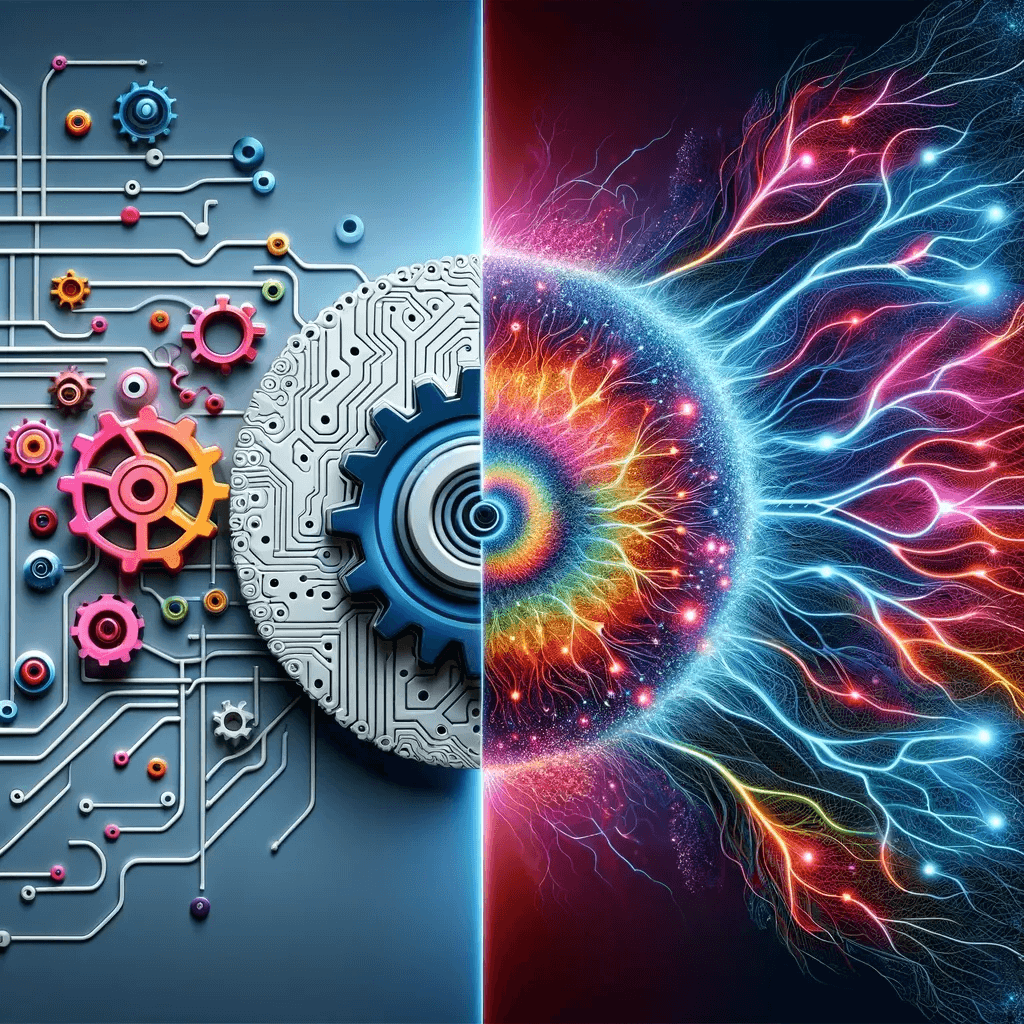
Knowing AI VS Understanding AI
Knowing AI vs Understanding AI
The real "instruction manual" of AI
In my view, understanding AI requires combining two crucial aspects:
- Its history
- The rational foundation on which it stands
Its history
I won't go too deep into this because there's a lot to unpack: from ancient myths to Alan Turing and his test, to the scientific conferences of the 1950s where "artificial intelligence" was first discussed.
But for me, there's one essential book to grasp the big picture: "The Myth of Artificial Intelligence" by Erik J. Larson.
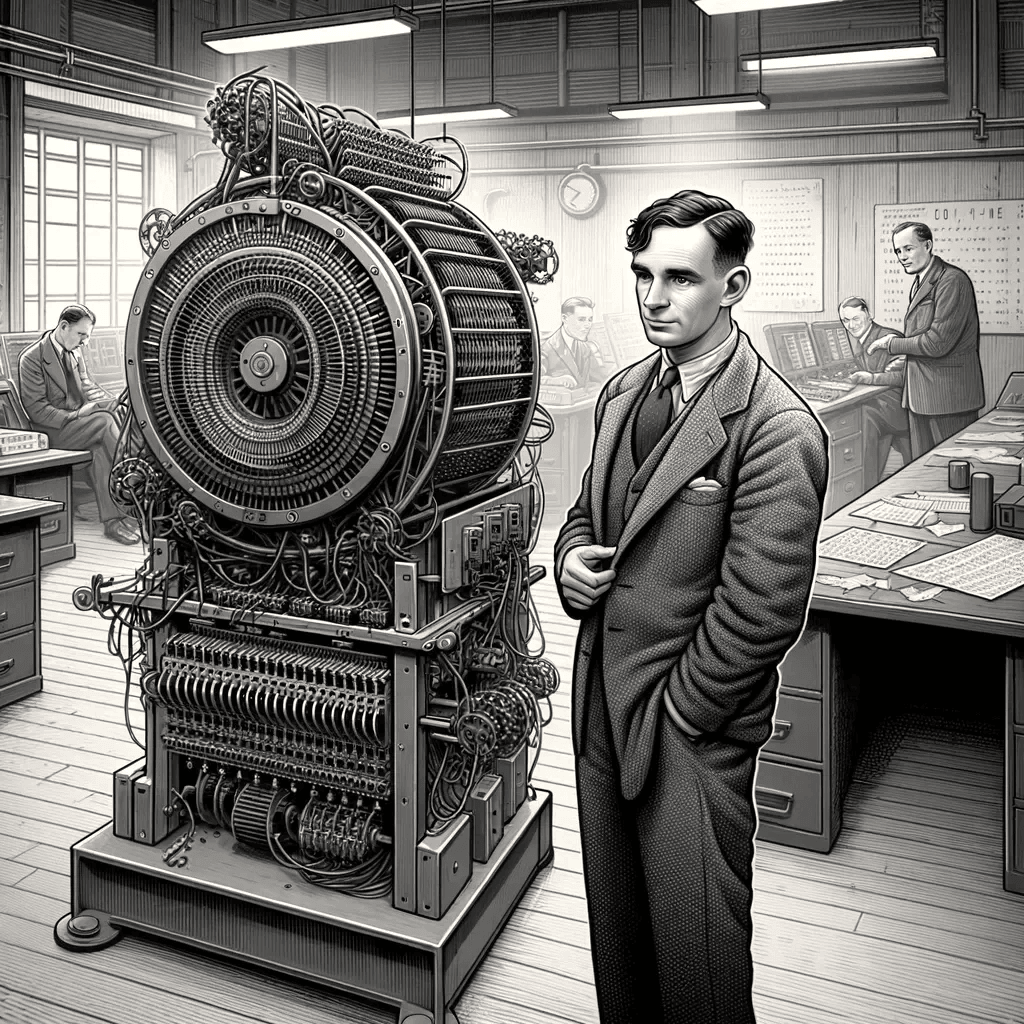
Illustration of Alan Turing with the "Bombe" machine at Bletchley Park.
Its rational foundation
As its name suggests, the goal of Artificial Intelligence is to imitate human intelligence: to match it (and in some cases, surpass it) through artificial means.
And to understand how AI tries to imitate the human mind, we must first understand how the human mind reasons.
The human mind uses several types of reasoning depending on the context or the problem: deductive, inductive, abductive, heuristic, analogical...
But the three pillars on which AI constantly pivots are deduction, induction, and abduction.
The three pillars of AI reasoning
To explain these three modes of reasoning in practical terms, I'll use examples from digital product development.
Abstract representation of deduction, induction and abduction.
Deduction in digital products
Description: applying general rules to specific cases to reach a conclusion.
Situation: you're designing an e-commerce platform.
General rule: if pages take too long to load, users tend to leave.
Specific case: your product page has multiple high-resolution images.
Deductive application: you deduce that if you don't optimize the images, you'll lose users. So you compress them to improve load speed.
Induction in digital products
Description: observing specific data and generalizing it into a broader rule.
Situation: you analyze how users interact with your mobile app.
Observation: users who comment tend to spend more time in the app.
Inductive application: you infer that encouraging interaction (e.g., with polls or forums) could increase retention.
Abduction in digital products
Description: starting from an observation and seeking the most plausible explanation. This is where creativity and lateral thinking reside.
Situation: you notice a sudden drop in e-commerce conversions.
Observation: it started right after a new release.
Abductive hypothesis: something in that version affected the user experience.
Abductive action: you review changes, run usability tests, and inspect the checkout flow to find the issue.
These reasoning modes define both the essence and the limitations of AI.
While it has become extremely mature in deduction and induction (solving logical problems and finding patterns in large datasets), its abductive reasoning remains underdeveloped.
And that difference is not trivial: it reflects the gap between an AI that applies rules and one capable of thinking creatively and understanding complex contexts the way humans do.
A historical example: AI as complement, not substitute
Beyond the cinematic drama, The Imitation Game shows something real: the importance of abductive reasoning.
Alan Turing and his team, while trying to decode Nazi Enigma messages, combined deduction, induction and, at a critical moment, an abductive intuition.
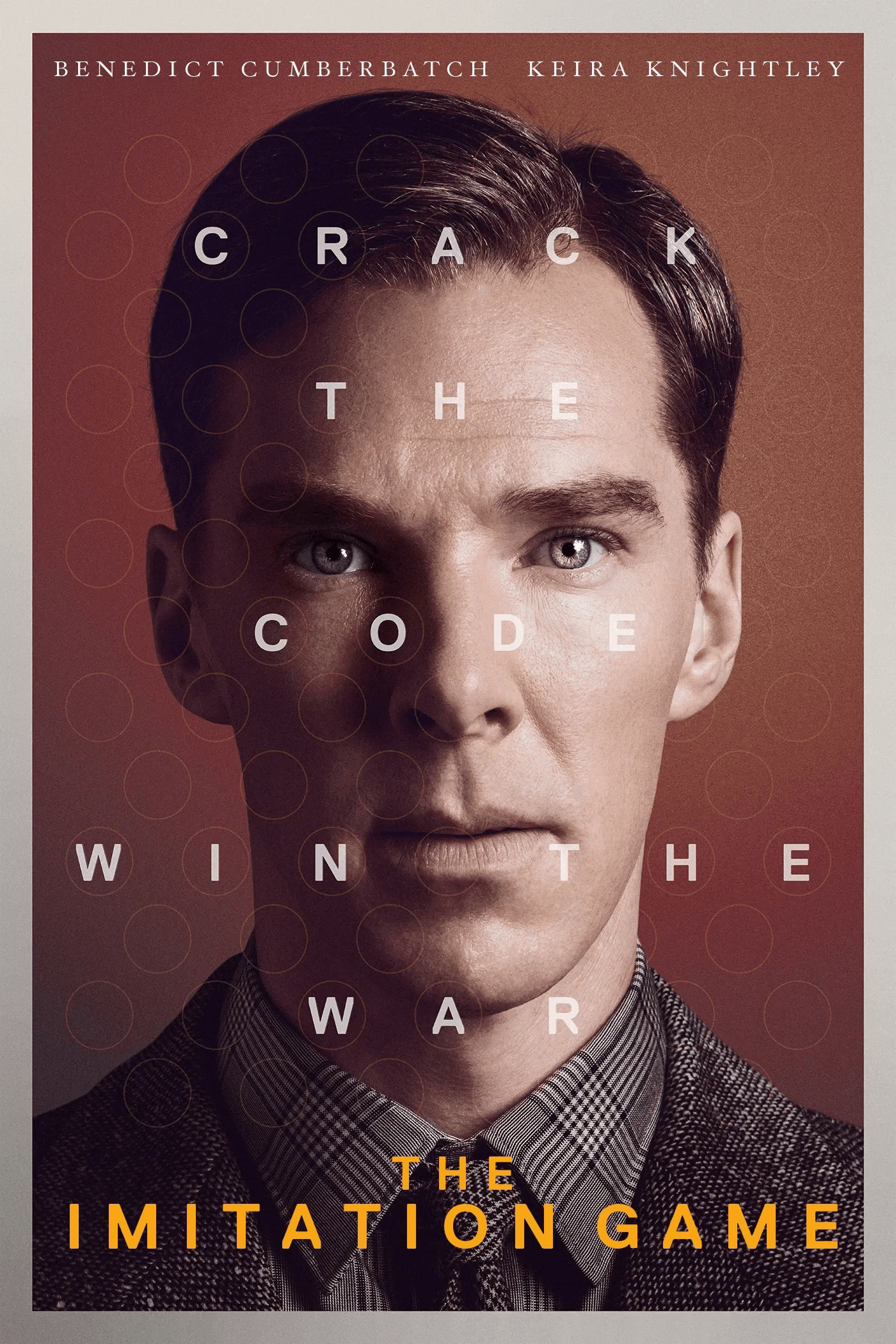
Poster of the movie "The Imitation Game"
A radio operator told Turing that German messages often began with the same letters: "Heil Hitler."
That small, seemingly trivial detail became the key.
It allowed him to hypothesize: use that repeated pattern as a calibration anchor for the machine each day.
That's how they managed to accelerate codebreaking.
This episode illustrates how human creativity (abduction) unlocks impossible problems, reminding us that AI is still a complement, not a substitute.
The value of understanding the tool
Understanding what's behind AI is essential to maximize its potential.
In my experience as VP of Design at TaxDown, I live this every day.
By understanding how AI deduces, induces, and abducts, we can design more effective and human products.
For example:
- Induction: AI analyzes thousands of tax returns to identify patterns and optimize personalized deductions.
- Deduction: it applies the latest regulations to ensure accuracy and avoid errors.
- Abduction: when user data is ambiguous, it formulates hypotheses and guides possible outcomes.
But that last step requires a human team to interpret, formalize, and test the AI's hypotheses.
That's the balance: AI executes, humans interpret.
Complement, not substitute
AI is still far from replicating the full complexity of the human mind.
But its ability to act as a complementary tool is undeniable.
In digital product design and development, it's not here to replace creativity or judgment, but to enhance them.
It allows us to solve problems at a scale and speed once impossible, freeing time for the tasks that demand empathy and meaning.
Ultimately, the union between artificial and human intelligence exceeds the sum of its parts, and it will only reach its true potential when we fully understand it.